- Home
- Practical guides
- AI photo sorting
Practical guide · technology
How our AI sorts 1.2 million photos a season.
A visitor will not look for their photo among thousands of others. Automatic sorting does that work for them, and for your teams.
The problem
In 2026, our systems took 1.2 million photos. On a busy day, a single photo point produces several thousand. Without sorting, it would take a salesperson to find each image, and the queue would drive buyers away.
Step 1: trigger at the right moment
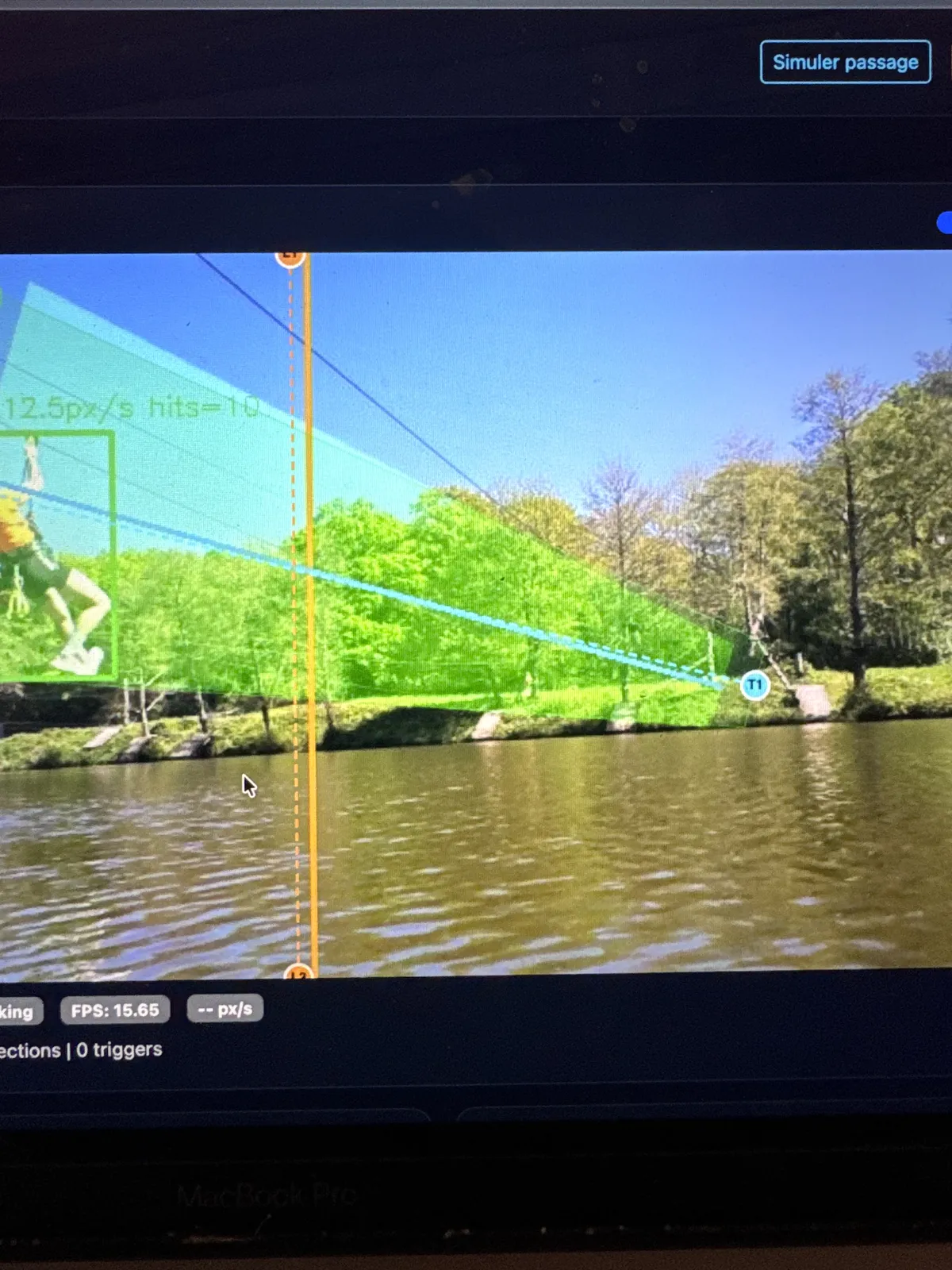
On the PhotoRadar, the AI spots the visitor in a zone we draw at installation, and takes the photo when they are in it. No sensor to fit on the ride, no staff on the spot.
Step 2: discard the failed photos
Empty photo, visitor cut off, blurred image: they are removed before reaching the kiosk. The visitor only sees photos worth looking at.
Step 3: finding your photos
Visitors keep a QR-code ticket, or a wristband, throughout their visit. They scan it at the kiosk and find their photos within seconds. The software does not recognise faces: the ticket makes the link.
Step 4: monitor the equipment
The system continuously checks the units and the kiosks. It detects an incident and fixes it by itself when possible. If not, it alerts us before the park notices.
What this changes for the park
- No photo handling by your teams.
- Less waiting at the point of sale.
- Statistics by photo point, in your Pixiel Cloud space.
What the AI does not do
It does not replace a photographer: where it takes human contact, a coaxed smile or a pose, we put someone there.